Peonies for Southern Growers
Posted by Walt Krukowski @ Mountain Flower Farm on Aug 9th 2026
Peonies for Southern Growers: Growing Peonies in Zones 7–8
We often hear some version of the same question from gardeners and flower growers in warmer parts of the country:
Can I really grow peonies here?
For many growers in USDA Zones 7 and 8, the answer is yes—but variety selection, planting location, and planting technique become increasingly important as you move south.
Peonies are famously associated with cold northern gardens. They need a period of winter dormancy and generally perform exceptionally well in climates like ours here in Vermont. But that doesn't mean peonies stop at the Mason-Dixon Line.
We've shipped peony roots to growers throughout the country for years, including many successful growers in Zones 7 and 8. The key is understanding what peonies need—and giving them the best possible conditions.
Start With the Right Varieties
Not every peony is equally suited to a warmer climate.
For southern growers, we generally recommend concentrating on early and early-midseason varieties. These peonies emerge, develop, and flower earlier in spring, allowing them to complete more of their bloom cycle before intense summer heat arrives.
Late-season varieties that perform beautifully in Vermont may have a much more difficult time farther south.
This is one situation where choosing a peony simply because you love the photograph isn't always the best strategy.
Bloom timing matters.
When selecting roots, look carefully at the listed bloom season and favor varieties toward the earlier end of the peony calendar.
Consider Itoh Peonies
Southern growers should also take a serious look at Itoh, or intersectional, peonies.
Itohs are hybrids between herbaceous and tree peonies, combining characteristics of both. They tend to produce vigorous plants with strong stems, attractive foliage, and spectacular flowers.
Most importantly for warmer-climate gardeners, many Itoh varieties have shown excellent vigor and adaptability across a wider range of growing conditions.
For gardeners near the warmer edge of traditional peony-growing territory, we think they are particularly worth considering.
Mountain Flower Farm grows and offers several outstanding Itoh varieties, and we've increasingly come to appreciate just how tough and adaptable these plants can be.
And Then There's 'Coral Charm'
If we had to point southern growers toward one traditional herbaceous peony that continually impresses us with its adaptability, 'Coral Charm' would be near the very top of the list.
After decades of growing peonies, we've seen something unusual about this variety.
Coral Charm seems remarkably unfazed by temperature.
We've watched it grow vigorously and flower reliably across very different spring temperature regimes. While some peonies can be noticeably affected by unusual warmth, cold, or rapidly changing spring conditions, Coral Charm has demonstrated an exceptional ability to simply keep growing and produce its flowers.
That adaptability is especially interesting for southern growers.
It is also an early-blooming peony, another important advantage in warmer climates. The plant can progress through much of its flowering cycle before the hottest part of the season arrives.
And, of course, the flower itself is extraordinary.
The large semi-double blooms open an intense coral-salmon and gradually soften through peach and cream tones as they mature. A planting in bloom can display several shades simultaneously.
For anyone attempting peonies in a warmer climate, Coral Charm is one of the first varieties we would consider.
Plant Peonies Shallowly
This is important everywhere—but particularly in warmer climates.
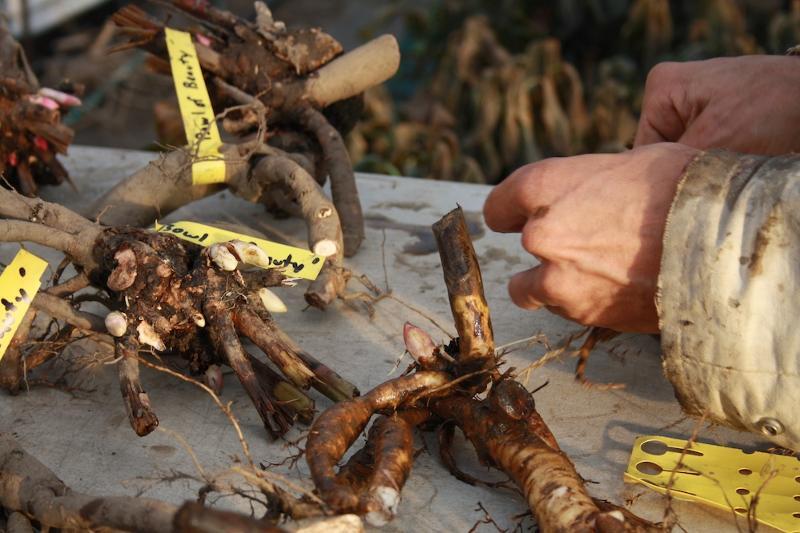
Peonies form their flower buds, or "eyes," near the crown of the plant. In colder climates we generally plant these eyes about 1–2 inches below the finished soil surface.
In Zones 7–8, err toward the shallow end.
Planting too deeply is one of the most common reasons a healthy peony grows foliage but fails to bloom. Southern growers don't need additional insulation from winter cold, and burying the crown deeply can make flowering more difficult.
Make sure the soil settles firmly around the roots while keeping the eyes close to the surface.
Give Them Sun—But Think About Afternoon Heat
Peonies love sunshine.
In northern climates, full sun is usually ideal. In the South, however, there's an important distinction between getting enough sunlight and subjecting plants to relentless late-afternoon heat.
A location receiving morning sun with some protection from the hottest afternoon sun can be an excellent choice in warmer Zone 7 and Zone 8 gardens.
Avoid deep shade—the plants still need plenty of light to build strong stems and produce flowers.
The goal is simply to moderate the most intense heat of the day.
Drainage Is Essential
Peonies can live for generations in the right location, but they strongly dislike sitting in wet soil.
Choose a site with excellent drainage.
If you have heavy clay or a location that remains wet after rain, improve the planting area before your roots arrive. A slightly raised planting area can be helpful where drainage is marginal.
Peonies develop substantial root systems over time, so preparing the soil properly before planting is worth the effort.
Fall Planting Is Especially Important in the South
Bare-root peonies are traditionally planted in fall—and for southern growers, there is an additional advantage.
Fall planting gives the root system an opportunity to begin establishing during cool weather before the plant faces its first hot summer.
Plant as soon as appropriate fall conditions arrive in your area.
Once planted, water thoroughly to settle the soil around the root. After that, avoid keeping the planting area constantly wet.
The objective isn't rapid top growth. The plant is quietly establishing underground.
Don't Expect Instant Gratification
Peonies reward patience.
A newly planted root may produce only a few stems during its first spring. That's completely normal.
During the first several years, the plant is establishing the enormous underground root system that eventually supports decades of flowers.
Resist the temptation to move a young plant simply because it hasn't reached its full potential immediately.
Choose the location carefully, plant correctly—and give it time.
Can Peonies Really Grow in Zone 8?
Yes, in many Zone 8 locations they can.
But Zone 8 represents something of a transition area for traditional herbaceous peonies. Local climate matters tremendously. Elevation, winter temperatures, summer heat, soil conditions, and even the microclimate around your house can make the difference between marginal and excellent performance.
That's why we recommend that Zone 7 and 8 growers be particularly thoughtful about:
Early-blooming varieties
Itoh peonies
Adaptable cultivars such as Coral Charm
Shallow planting
Excellent drainage
Plenty of sunlight
Some protection from extreme afternoon heat
Fall planting
The farther south you garden, the more important these details become.
A Peony Is Worth Getting Right
One of the extraordinary things about peonies is their longevity.
Properly situated plants can flower for decades and sometimes generations with remarkably little intervention.
That's a very different proposition from planting an annual flower bed every spring.
Take some time this fall to choose the right varieties, prepare the planting location properly, and get the roots established during cool weather.
A little extra attention at planting can reward you with flowers every spring for a very, very long time.
Mountain Flower Farm peony roots are grown here on our Vermont farm, freshly dug in fall, and shipped directly to growers and gardeners around the country. Browse our current selection of early-blooming, Itoh, and other peonies for fall planting.